





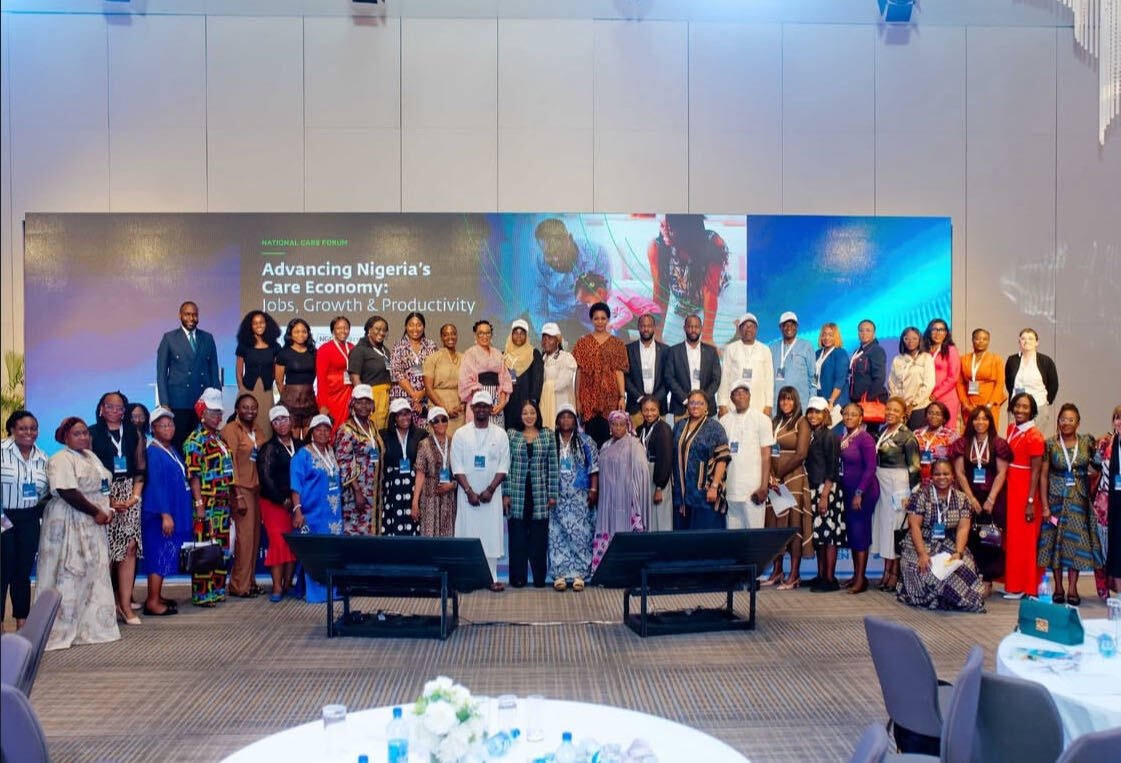
Women Impacting Nigeria (WIN) joined government representatives, development partners and private-sector stakeholders at the World Bank Group’s National Care Forum in Lagos to examine how investment in the care economy can expand women’s economic opportunities, create jobs and support national development.
Nigeria’s conversation about women’s economic empowerment is increasingly recognising an issue that has long remained outside mainstream economic discussions: care.
From childcare and elder care to support for persons with disabilities, care responsibilities influence how women work, earn, build businesses and participate in society. Yet, much of this work remains unpaid, undervalued and disproportionately carried by women.
This was central to discussions at the World Bank Group’s National Care Forum, held in Lagos on November 17, 2026, under the theme Advancing Nigeria’s Care Economy: Jobs, Growth and Productivity, which Women Impacting Nigeria (WIN) participated in.
The forum brought together representatives of government, development institutions, financial organisations, employers, childcare providers and civil society to explore the policies, investments and partnerships required to strengthen Nigeria’s care economy.
The engagement came at a significant time for the country, following the Federal Executive Council’s approval of the National Care Policy and Implementation Plan 2026–2030 on October 28, 2026.
Nigeria’s National Care Policy: A Framework for Change
The approval of the National Care Policy marks an important step towards recognising care as an essential part of Nigeria’s social and economic infrastructure.
The policy provides a national framework covering childcare, early childhood development, elder care, disability support, care workers’ welfare and family-friendly workplaces. It also proposes sustainable financing mechanisms, including a National Care Fund, to support implementation.
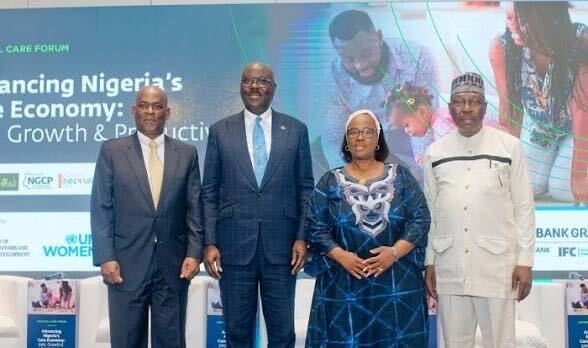
Speaking on behalf of the Minister of Women Affairs and Social Development, the Director of Child Development, Andrew Ali Madogo, disclosed at the forum that the Federal Executive Council had also approved two other national instruments alongside the care policy.
He referenced UN Women’s 2026 care economy modelling for West and Central Africa, which estimates that closing Nigeria’s care gaps and funding universal childcare could generate between 9.4 million and 17 million jobs and contribute at least $9.3 billion to the economy.
He called on state governments to domesticate the policy, while emphasising the importance of professional training, decent wages and improved working conditions for care workers.
The next phase will therefore require coordinated action across government, development partners, financial institutions and the private sector to translate policy provisions into accessible services and sustainable employment opportunities.
The Economic Cost of Leaving Care Behind
Presenting research on the economic case for childcare in Nigeria, Ayodele Fashogbon, Senior Economist at the World Bank Group’s Gender Innovation Lab, highlighted the relationship between inadequate childcare and women’s participation in the workforce.
The findings showed that Nigerian women spend an average of 76 minutes daily on childcare, compared with 13 minutes for men. Approximately 33 million children aged zero to five also lack access to centre-based childcare.
The consequences extend to women’s employment and income. According to the research, women’s employment declines by about 36% following the arrival of a child under six, while men’s employment increases by approximately 10%.
Expanding access to quality childcare could increase women’s employment by 8.5%, women’s income by 22.5% and household income by approximately 44%.
The financing challenges within the sector were also brought into focus. Approximately 75% of childcare providers struggle to secure funding, while only 5% of private-sector employers invest in childcare.
These figures highlight an important gap: women are expected to participate in a growing economy while the infrastructure that supports their care responsibilities remains inadequate.
Investment, Partnerships and the Future of Care
Discussions at the forum also examined how government and private-sector investment could expand access to quality care services.
Christian Mulamula, Head of Office, Nigeria, International Finance Corporation, World Bank Group, described care as essential economic infrastructure. He highlighted the financing challenges facing childcare entrepreneurs, noting that 76% lacked access to formal finance.
He also highlighted the World Bank-supported IDEAS project, through which Nigeria’s first National Occupational Standards for Childcare had been developed. More than 4,500 aspiring caregivers and entrepreneurs, approximately 90% of them women, were undergoing training under the initiative.
Representing Lagos State Governor Babajide Sanwo-Olu, Commissioner for Finance and Chairman of the Lagos State Public Procurement Agency, Abayomi Oluyomi, outlined the state’s plans to develop an investment-focused care policy framework, strengthen regulations and encourage private-sector participation.
The discussions reinforced the need for financing models that support childcare businesses, professional standards that protect children and care workers, and workplace policies that recognise the realities of working families.
Why the Care Economy Matters to Women’s Empowerment
For Women Impacting Nigeria, the care economy is closely connected to the broader work of advancing women’s leadership, entrepreneurship, financial literacy and economic participation.
A woman’s ability to grow a business, pursue employment, acquire new skills or take on leadership responsibilities is influenced by the support systems available to her. When affordable childcare is inaccessible and care responsibilities remain unequally distributed, women’s opportunities are affected.
This makes investment in care more than a social intervention. It is also an investment in women’s productivity, financial independence and capacity to contribute to national development.
WIN’s participation in the National Care Forum reflects the importance of engaging in conversations that influence the policies and structures shaping women’s lives.
The approval of the National Care Policy provides a framework for progress. However, its success will depend on implementation, sustainable financing, state-level adoption and the commitment of relevant stakeholders to making quality care accessible.
As Nigeria considers the future of its workforce and economic growth, the care economy must remain part of the conversation.
For women to participate fully in the economy, the systems that support their lives and responsibilities must also work. Advancing Nigeria’s care economy is an important step towards making that possible.
Women Impacting Nigeria remains committed to engaging in conversations and initiatives that advance women’s economic empowerment, leadership and development.