




Nigeria’s journey toward inclusive governance is taking a major step with the introduction of the Reserved Seats for Women Bill (HB-1349); a constitutional amendment aimed at increasing female representation at both federal and state levels.
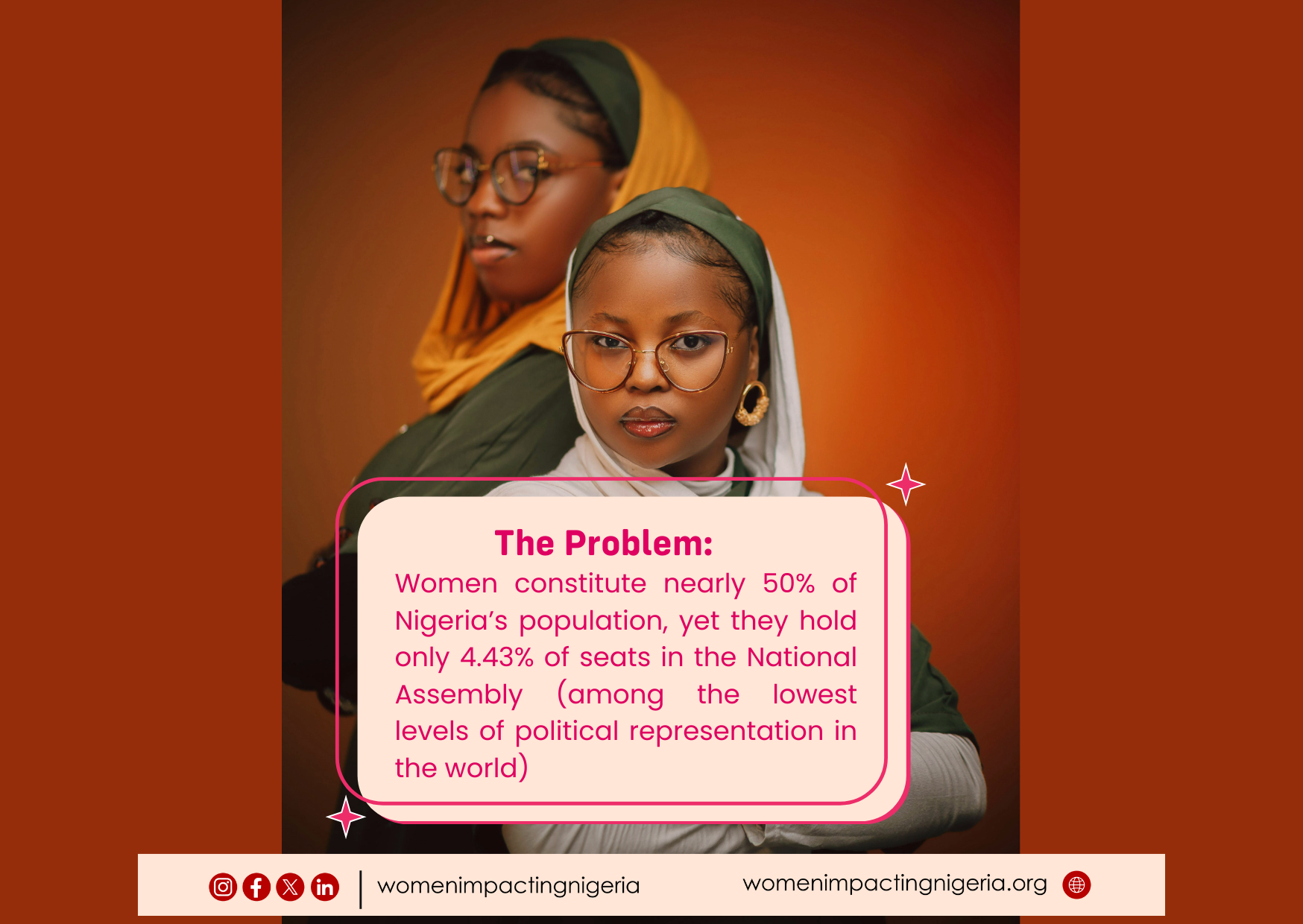
Currently, women hold less than 5% of seats in the National Assembly. The proposed bill, sponsored by Deputy Speaker Rt. Hon. Benjamin Okezie Kalu, supported by key legislative leaders, seeks to address this long-standing imbalance by creating special constituencies for women candidates only.
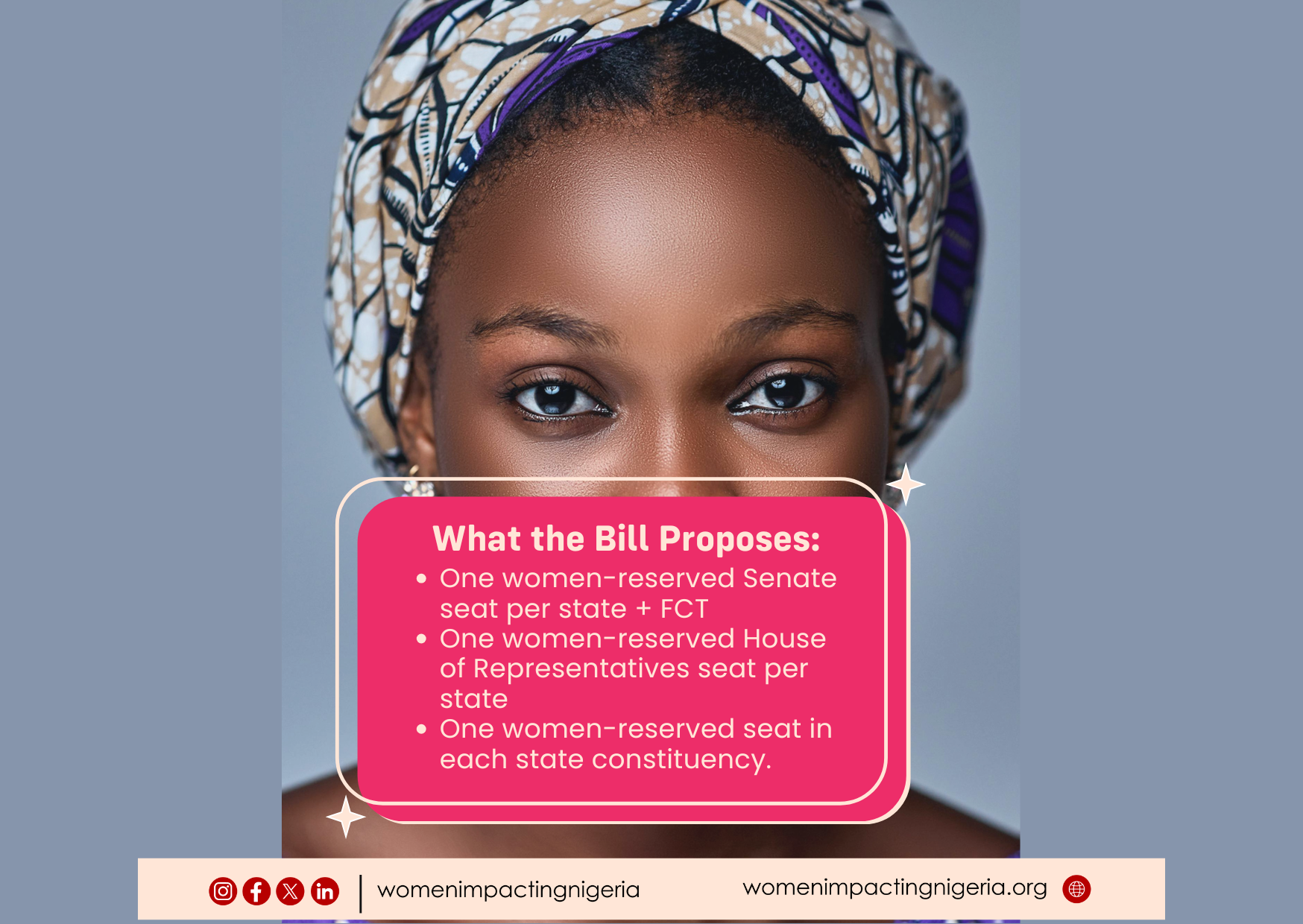
What the Bill Proposes
- 37 additional Senate seats, one per state and the FCT
- 37 additional House of Representatives seats
- 3 additional seats per State Assembly
- 16-year lifespan (four general election cycles) before constitutional review
No reduction in existing seats, all current constituencies remain
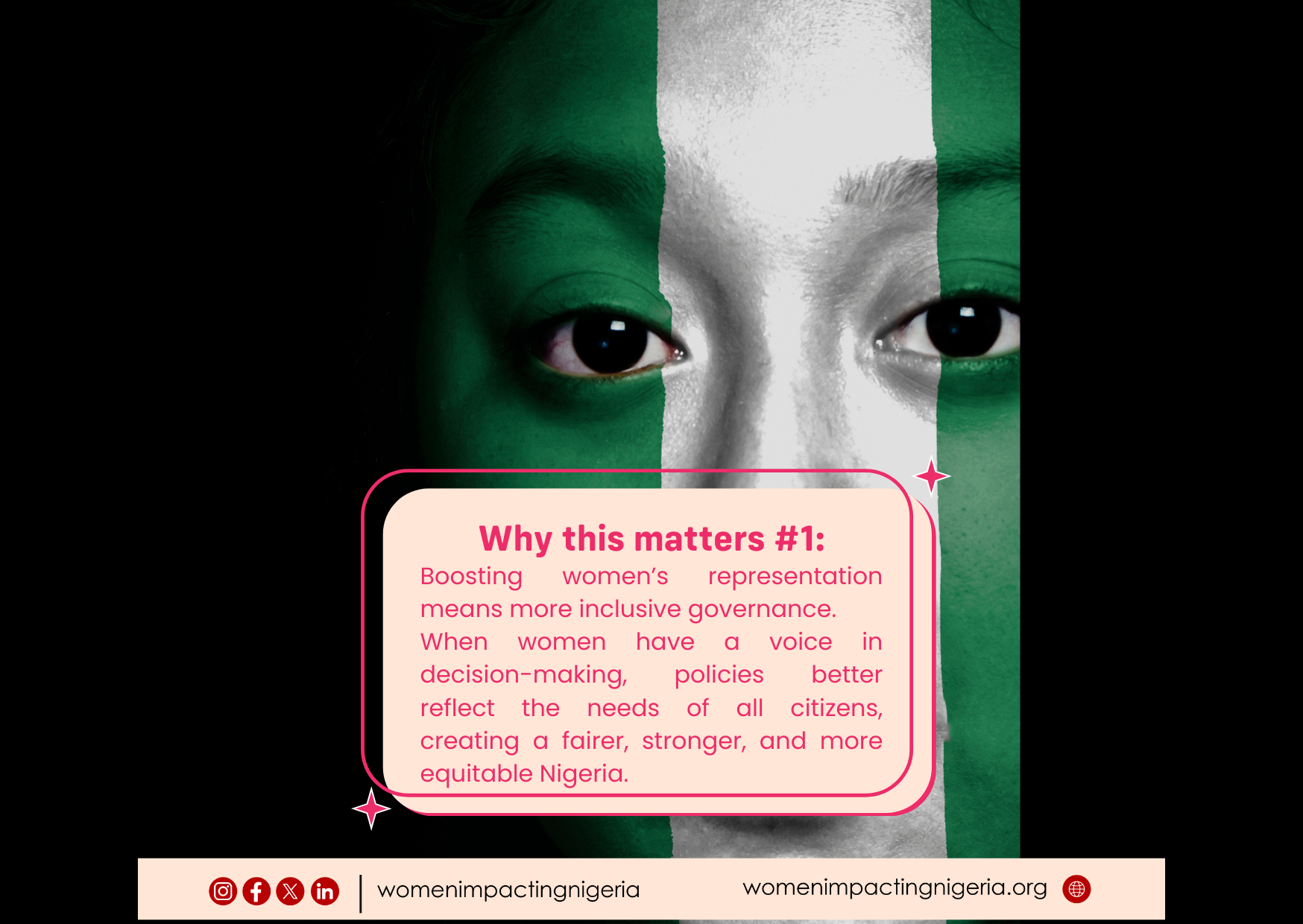
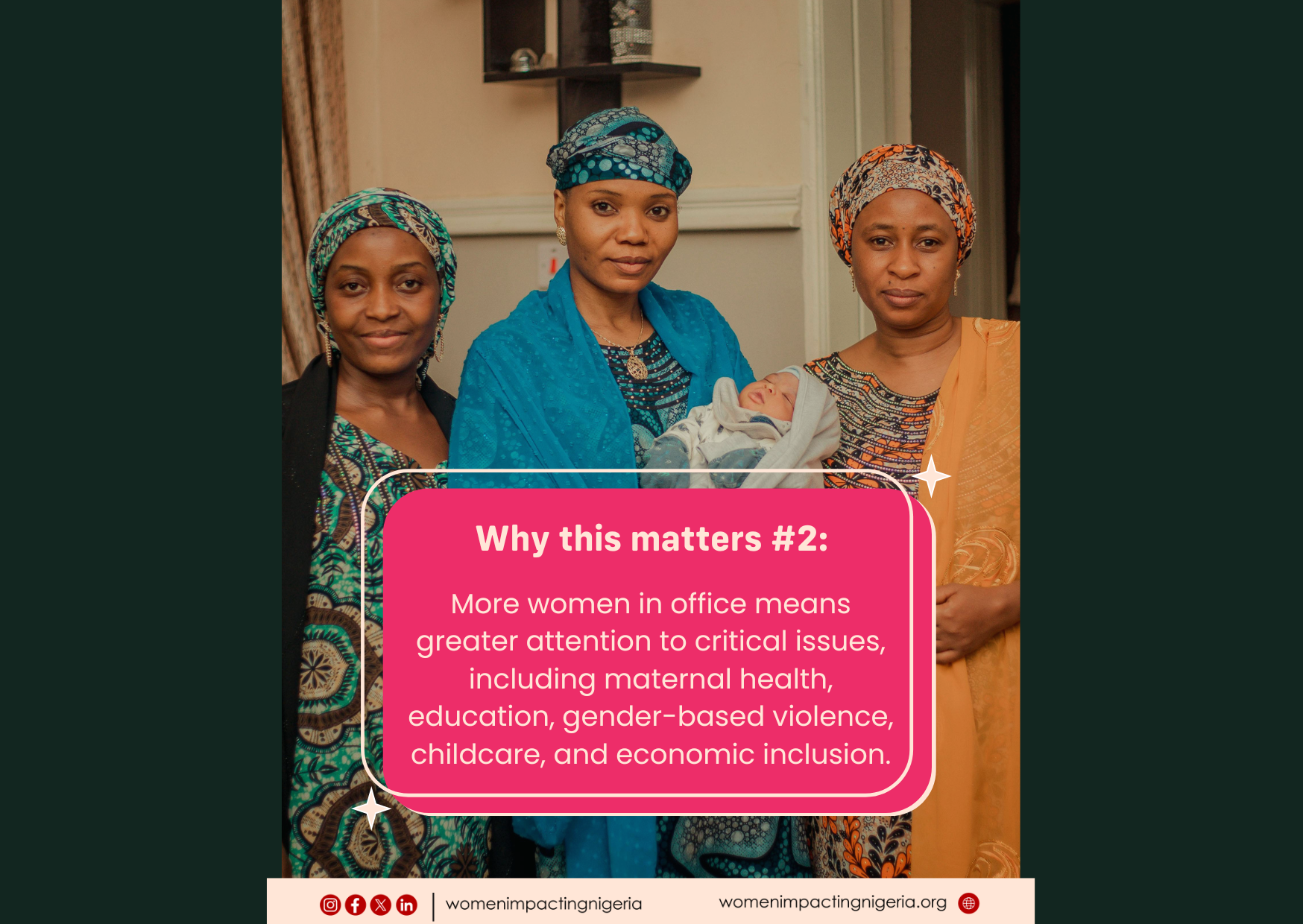
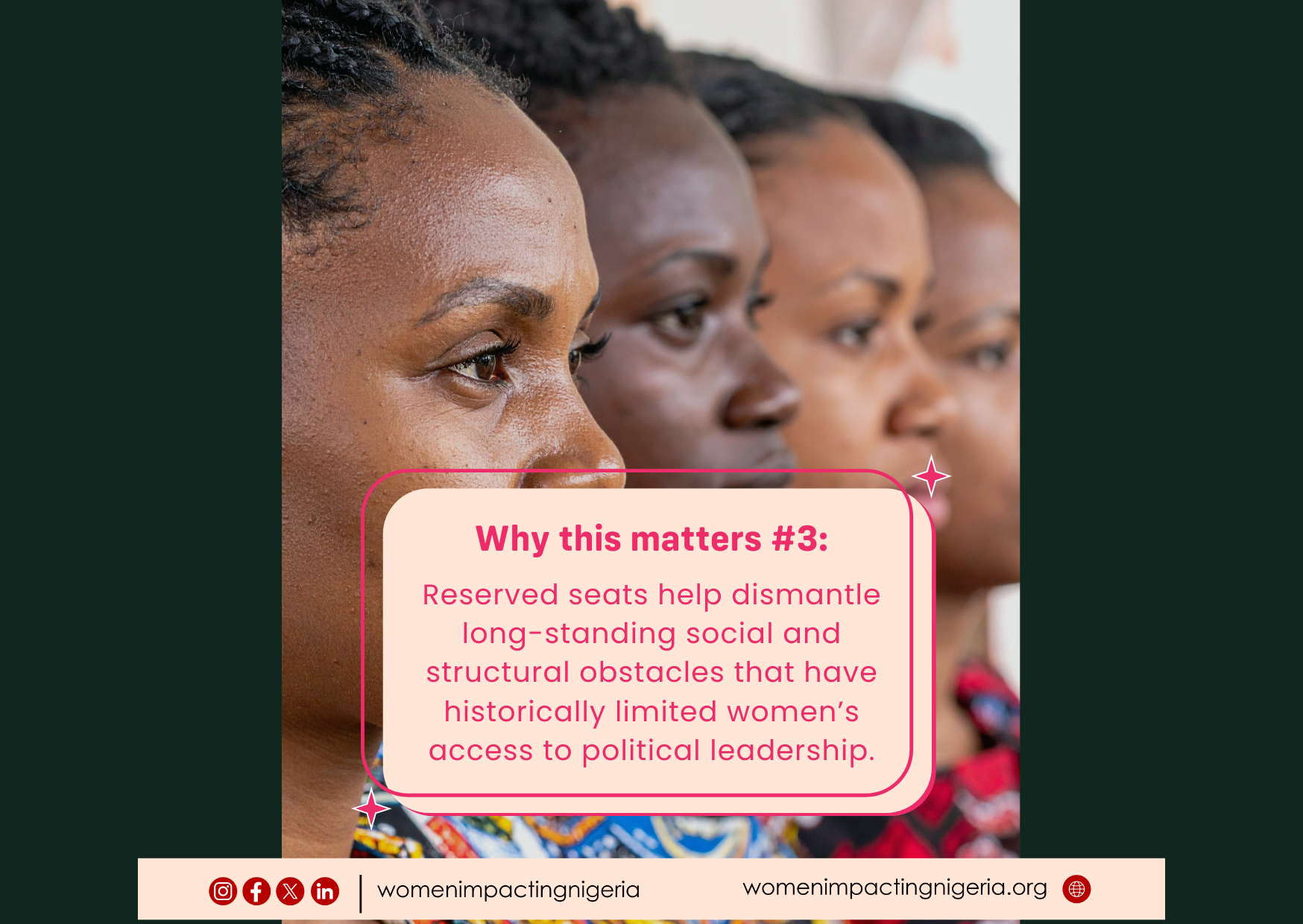
If passed, this amendment would raise women’s political representation significantly and align Nigeria more closely with global commitments under the UN Sustainable Development Goal 5 (Gender Equality) and the African Union’s Agenda 2063.
Why It Matters
Greater women’s participation ensures broader perspectives in governance, improved policymaking, and a democracy that truly reflects its population.
Research shows that societies with higher female representation experience stronger economic growth, improved health outcomes, and greater social equity.
The Road Ahead
The Bill requires two-thirds approval across the National and State Assemblies to become law. Civil society organizations and advocacy groups, including Women Impacting Nigeria, continue to call for its swift passage before the end of this legislative cycle.
This is more than legislation, it’s a chance to reshape Nigeria’s democracy for the better.