



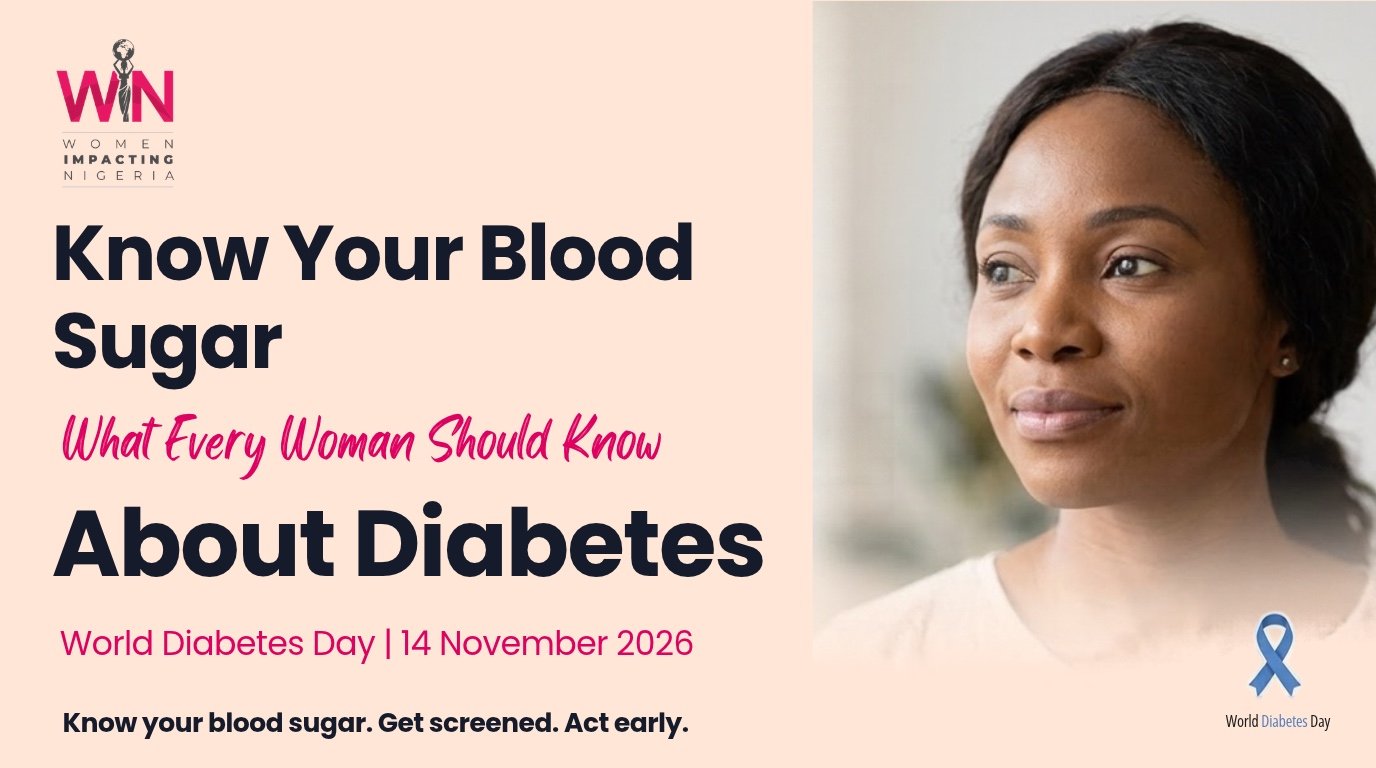
World Diabetes Day | 14 November 2026
When was the last time you checked your blood sugar?
Many people associate diabetes with consuming too much sugar. However, there is more to understanding blood glucose than avoiding sweets. Everyday foods, lifestyle habits, family history and other health factors can all play a role.
This World Diabetes Day, Women Impacting Nigeria (WIN) encourages women to understand their blood sugar, recognise possible warning signs and make screening a priority.
Diabetes Can Be Quiet. Know the Signs.
Type 2 diabetes can develop gradually, sometimes without noticeable symptoms.
Some warning signs to look out for include:
- Frequent thirst.
- Urinating more often than usual.
- Persistent tiredness.
- Blurred vision.
- Increased hunger.
- Unexplained weight loss.
- Wounds that take longer to heal.
These symptoms do not automatically mean you have diabetes, but they should not be ignored. Seek medical advice if you experience them.
It’s Not Just About Added Sugar
Foods like rice, bread, garri, yam and other carbohydrate-rich meals are broken down into glucose during digestion, which affects blood sugar levels.
Understanding the Glycaemic Index (GI) can help you make more informed food choices. It measures how quickly carbohydrate-containing foods raise blood sugar.
However, portion sizes, food preparation and what you eat alongside a meal also matter.
Rather than eliminating familiar foods, focus on balanced meals, vegetables, appropriate portions, regular physical activity and limiting sugary drinks.
How Can You Check Your Blood Sugar?
You don’t have to rely on symptoms or guesswork. Blood tests can help you understand your blood glucose levels.
Two commonly used tests are:
Fasting Blood Glucose (FBG): Measures your blood sugar after an overnight fast.
HbA1c: Estimates your average blood sugar levels over the previous two to three months.
You can ask about these tests at a Primary Healthcare Centre, hospital, private clinic or accredited diagnostic laboratory.
A healthcare professional can advise you on the appropriate test and interpret your results.
Who Should Get Screened?
Everyone should be aware of their diabetes risk. However, people with a family history of diabetes, physical inactivity, overweight or obesity, or a history of gestational diabetes may need particular attention.
Speak with a healthcare professional about your individual risk and recommended screening schedule.
Your Health Deserves Your Attention
Diabetes is a serious health condition, but early detection and appropriate management can help prevent or delay complications.
This World Diabetes Day, take a moment to understand your numbers. Pay attention to your body, make informed food choices and encourage the women around you to get screened.
At Women Impacting Nigeria (WIN), we believe that informed women are better equipped to make decisions about their health and well-being.
Know your blood sugar. Get screened. Act early.
Women Impacting Nigeria (WIN)