




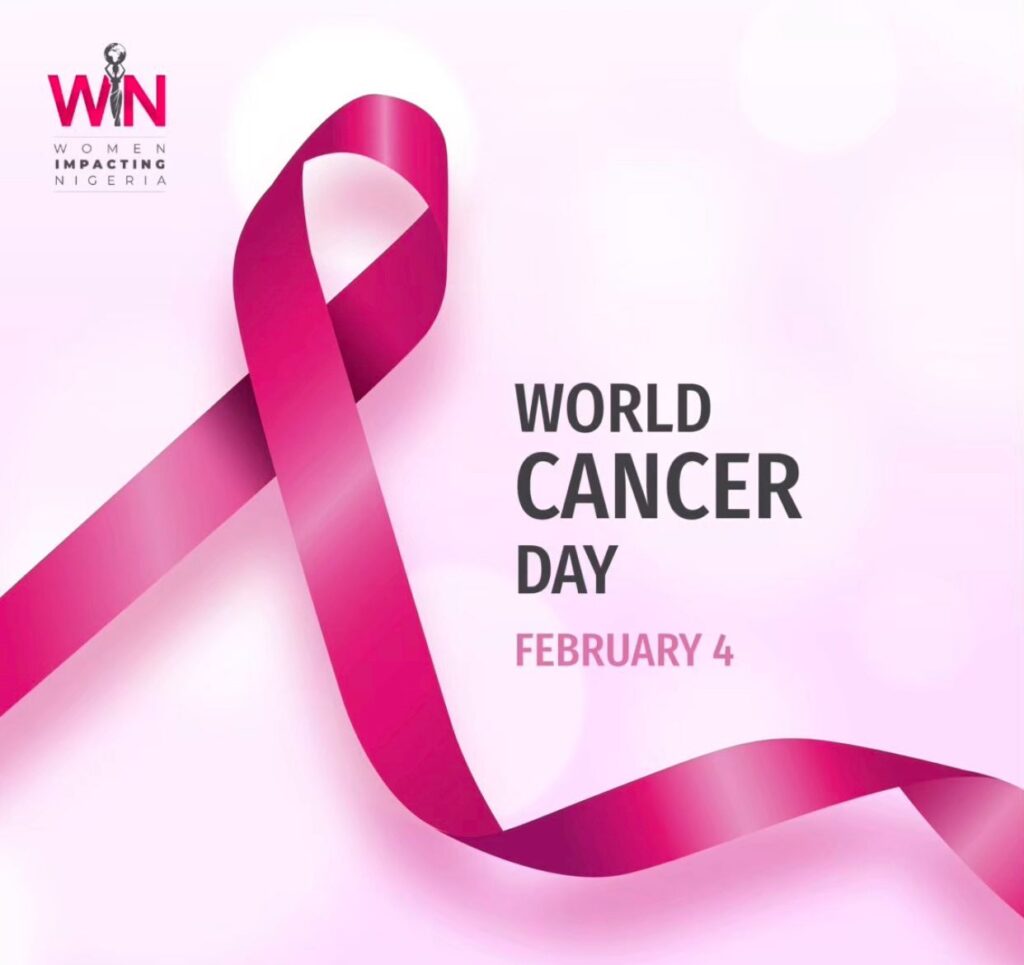
World Cancer Day is observed to showcase how cancer affects women’s health, income, and caregiving in Nigeria and the practical steps that individuals and communities can take. The World Cancer Day is also a moment to checkmate the real-life impact of cancer beyond hospitals and clinics. In Nigeria, health challenges often ripple into income, family responsibilities, and long-term stability especially for women.
This year’s theme, “United by Unique,” pinpoints how cancer experience differs for everyone, and support should be personal, respectful, and human. The theme is also a call to recognise two things at once:
- We are united in our shared responsibility to support one another.
- Each person’s cancer journey is unique physically, emotionally, financially, and socially.
In practice, that means awareness efforts should not be one-size-fits-all. It also means community support should not be built on assumptions. People need different forms of help at different times: information, encouragement, privacy, practical assistance, and dignity.
What the data says about cancer affecting women in Nigeria
Nigeria’s GLOBOCAN 2022 fact sheet indicates that breast cancer is the most frequently diagnosed cancer among women, with cervical cancer also among the leading burdens. [ Link]
This is essential because it helps focus awareness in a practical way: what information people need most, what symptoms should not be ignored, and where supportive conversations are urgently needed. Data does not replace medical advice, but it aids communities prioritise accurate education and timely action.
1) Income and economic stability can be disrupted
When illness affects a woman’s ability to work or run a business, the impact can reach beyond her personal finances. It can affect rent, school fees, food, and basic household needs. Even when families try their best, the pressure can be intense especially in homes where women are key earners or central to daily operations.
2) Caregiving responsibilities don’t pause
Many women are not only managing their own health, but also caring for children, elderly parents, or other relatives. This is the “dual burden” many families quietly navigate: treatment and recovery alongside caregiving and domestic responsibilities.
3) Education plans and long-term wellbeing can be affected
Illness can disrupt schooling or career plans either directly for the woman or indirectly for children and dependents who rely on her support. Over time, these disruptions can shape long-term wellbeing, opportunity, and household resilience.
What to expect when supporting someone (and what not to do)
Support can be simple, but it should be thoughtful. Here are examples of what helps:
Helpful ways to show support
- Check in gently: “How are you today?” or “How can I support you this week?”
- Listen more than you speak: People may want space to share at their own pace.
- Offer practical help: transport, meals, childcare, errands only if welcomed
- Respect privacy: ask what they are comfortable sharing, and with whom
- Encourage professional care: support is not a replacement for medical guidance
What to avoid
- Making assumptions about what someone “should” do
- Turning the person’s health situation into public discussion
- Offering unverified advice or “quick fixes” as certainty
- Pressuring someone to share details they want to keep private
The goal is to support someone’s dignity, not to manage their story.
Practical steps we can take today
World Cancer Day is a reminder that small actions, repeated widely, can reduce harm and increase early help-seeking. Here are community-minded steps anyone can take:
- Share accurate, verified health information
Use reputable sources and avoid spreading unconfirmed claims. - Encourage loved ones to notice changes and seek professional help early
Early attention to concerns can make a difference. - Show support without assumptions
Check in, listen, offer help, and respect privacy.
If you are part of a community group, workplace, or faith setting, consider how your environment can make it easier for people to access information and seek care without shame.
Conclusion
World Cancer Day invites us to look at cancer with both clarity and compassion. In Nigeria, the impact of illness can be closely tied to income stability, caregiving responsibilities, education plans, and long-term wellbeing especially for women and families.
Share accurate information, encourage early professional care, and show support that respects privacy, we help create a safer environment for people to seek help and stay supported.